

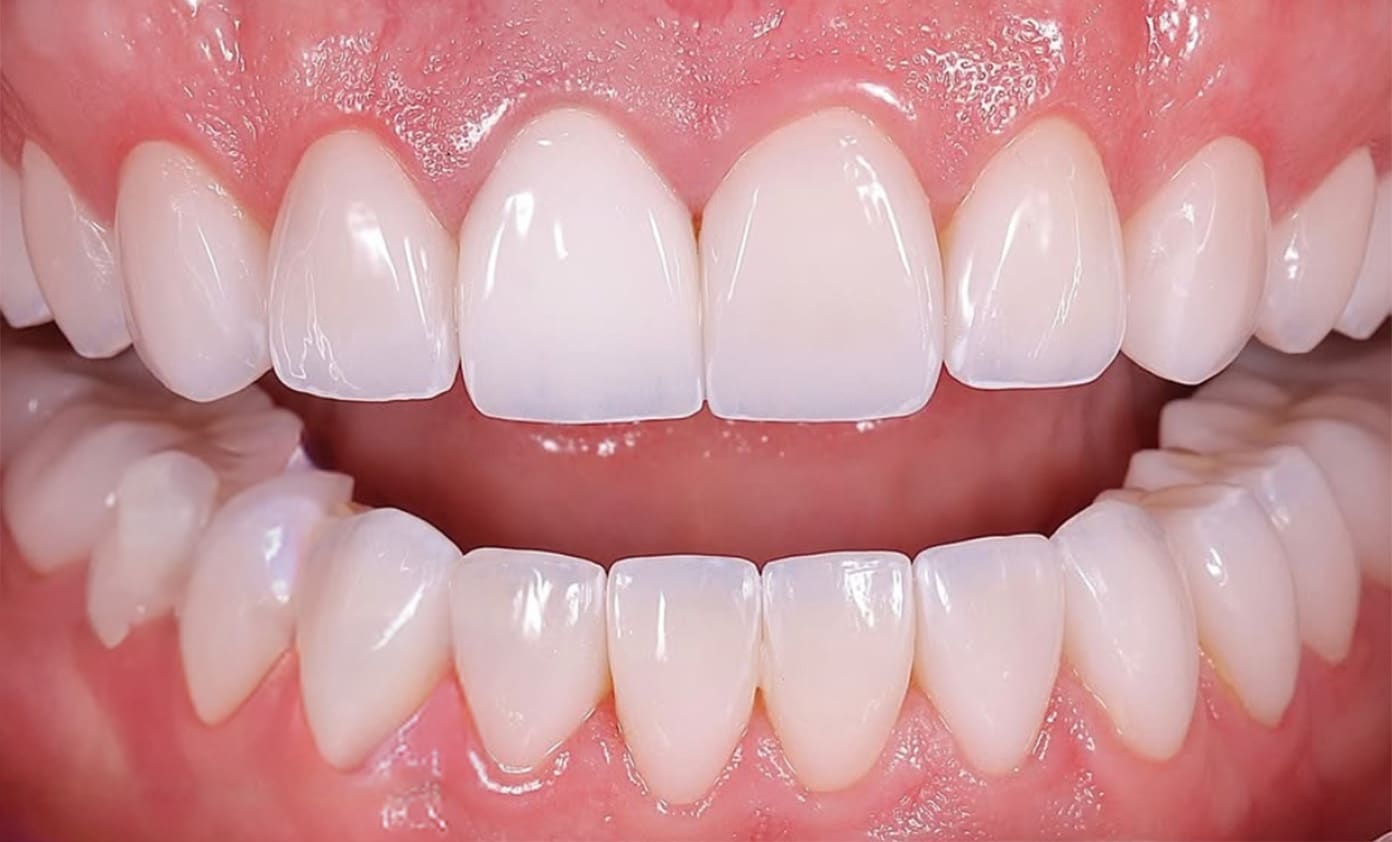
Porcelain veneers are thin, custom-made shells crafted from high-quality dental porcelain designed to cover the front surface of teeth. Their primary role is cosmetic: improving the appearance of teeth that are discolored, chipped, misaligned, or unevenly spaced. A veneer is bonded to the tooth after minimal preparation, typically involving a slight removal of enamel to make room for the veneer so it lays flush and looks natural. Good dental porcelain mimics the translucence and reflective qualities of natural enamel, giving a lifelike finish.
Benefits of porcelain veneers
-
Enhanced aesthetics: Porcelain veneers hide chips, cracks, stains, gaps, or minor bonding issues. Sarah Palmer DDS+1
-
Natural look and feel: The porcelain material is carefully shaded and polished to match your other teeth. Select Dental Associates+2Wikipedia+2
-
Durability: With good care, porcelain veneers often last 10-15 years or more. Cleveland Clinic+2Saratoga Dentistry+2
-
Stain resistance: Compared to composite resin, porcelain resists coffee, tea, wine stains better. Select Dental Associates+2britesmiles4u.com+2
What the procedure involves
-
Consultation & planning: Your dentist examines your teeth, takes impressions, photographs, possibly X-rays, to plan shade, shape, and alignment.
-
Tooth preparation: Gentle enamel reduction (often under local anesthesia), to allow space for the veneer without bulkiness.
-
Impression / lab work: A mold is sent to a dental lab where the porcelain veneers are fabricated to precise specifications.
-
Temporary stage (if needed): Temporary veneers may be fitted while the final ones are being made.
-
Bonding: The custom porcelain veneers are permanently bonded using dental cement. The surface is polished and finished.
-
Aftercare: Regular brushing, flossing, dental checkups. Avoid hard biting, protect from injury or abrasion.
Considerations
-
Veneers are irreversible: enamel removal is permanent.
-
Cost: Higher than composite veneers because of lab work and materials.
-
Sensitivity: Some sensitivity to cold/heat may occur after placement, usually temporary.
-
Not suitable for every case: If tooth decay is extensive, or there is insufficient tooth structure, other restorations (crowns, etc.) may be better.